
Should I buy a guitar with built-in amplification or without it?
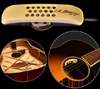 When I’m asked this question, I often suggest choosing the better acoustic instrument first rather than paying mainly for built-in electronics. In many model ranges, the amplified version costs more, while the same budget may buy a higher-quality non-amplified guitar. Many players do not use amplification at first, and a suitable guitar can later be fitted with a dedicated system that may be better matched to the player and instrument.
Can a classical or acoustic guitar be amplified?
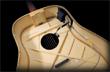 Yes. Modern pickup and amplification systems are available for classical and acoustic guitars, including advanced systems beyond the basic electronics supplied in many factory-equipped instruments. Prices range from a few hundred shekels to much more, depending on the system. Contact me for advice and installation on different types of string instruments.
Can a strap button be installed on a guitar?
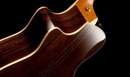 A strap button can be installed on a classical or acoustic guitar where appropriate. Because the job requires accurate drilling with the correct wood bit and we want to avoid unnecessary marks on the instrument, I recommend having it installed professionally in the workshop.
The bridge has lifted from the guitar body — what should I do?
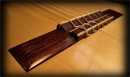 On classical and acoustic guitars, a bridge can separate from the body because of age, glue failure, heat, humidity or string tension. The instrument should be inspected and the bridge professionally re-glued or replaced when necessary.
My guitar’s nut or saddle broke — should I buy and replace it myself?
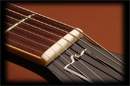 A guitar nut or saddle is commonly made from materials such as plastic or bone. Bone is generally stronger and can offer good tuning stability when properly fitted. If a nut or saddle breaks, buying a generic part and installing it without fitting is not recommended: the part must be shaped to the correct height and the string slots cut accurately. Incorrect fitting can compromise playability and create uneven forces on the instrument.